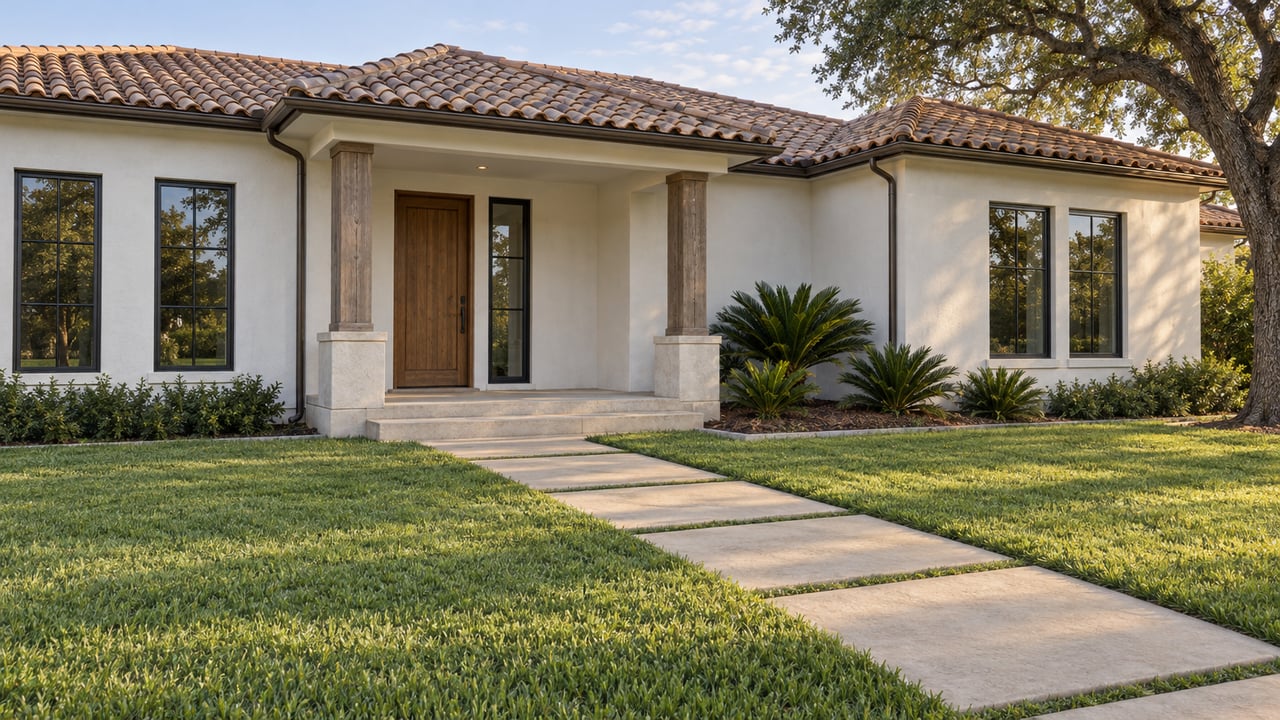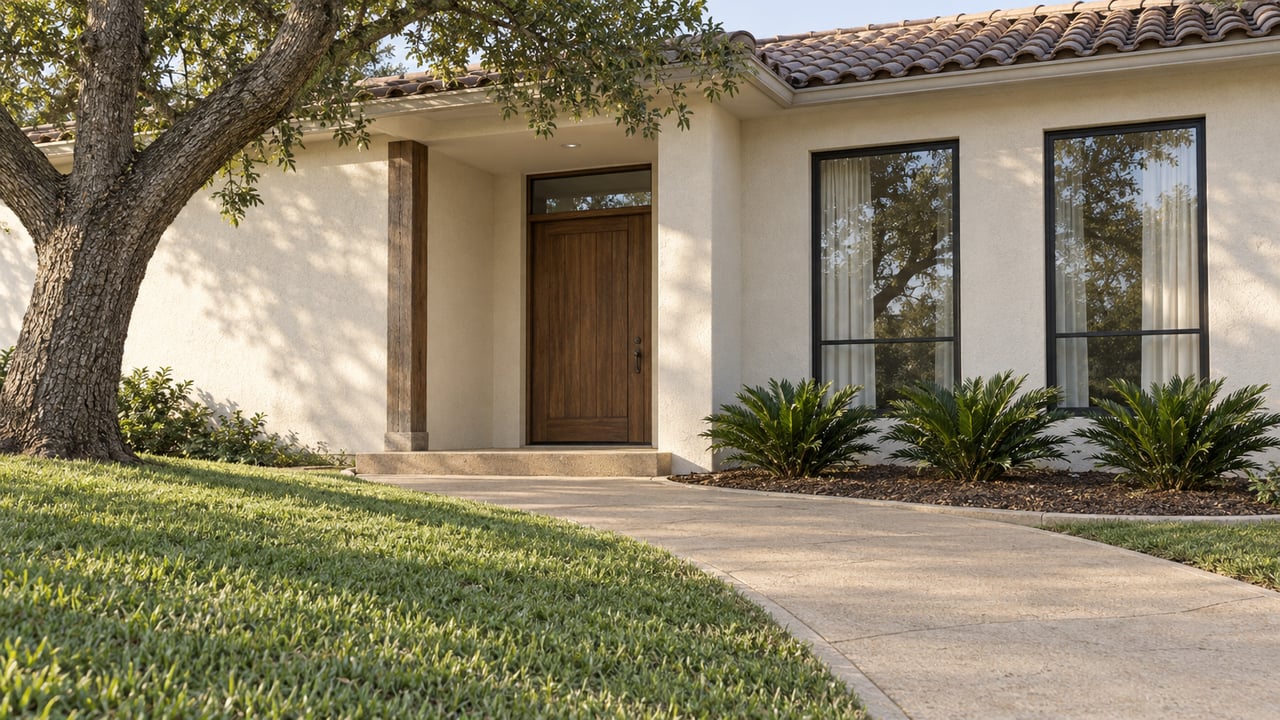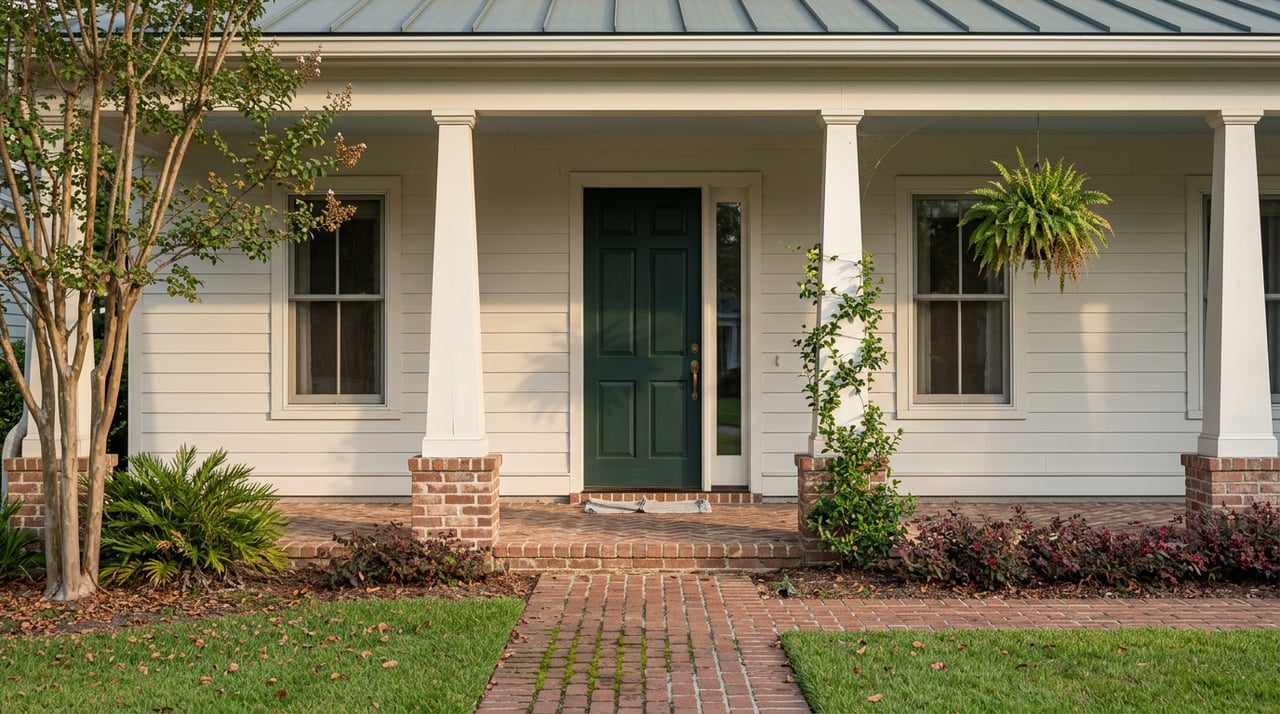
Two buyers walk into the same $600,000 budget this summer. One falls for a 1950s bungalow two blocks off Plant Street, brick sidewalks, oak canopy, walk to the farmers market on Saturday. The other likes a new build in Hamlin, tile roof, impact windows, a short drive to Disney's back gate. Both assume the number on the listing is the number they'll actually pay each month. Neither is right, and the gap runs in a direction most people don't expect.
The conventional wisdom says new construction in Horizon West carries fees that add to its carrying cost, while an older home downtown is simple by comparison. That's only half true. The CDD and HOA math does add real cost to new construction. But insurance quotes on an older home with an aging roof can swing the other way hard enough to erase that advantage entirely. The neighborhood you choose doesn't decide your total cost. The specific house does.
What a CDD Assessment Actually Buys, and What It Costs
A Community Development District is a public financing tool. Developers use it to build roads, stormwater systems, and amenity infrastructure up front, then repay the bonds through an annual assessment. Most Horizon West communities carry one. Assessments vary by community and how much of the original bond debt remains outstanding. Layer in HOA dues, typically $150 to $350 a month across Horizon West, and the combined line items add to the mortgage payment before a single utility bill arrives. Hawksmoor, for one, runs roughly $115 to $127 a month for single-family homes and $284 to $286 for townhomes as of June 2026, plus its CDD, while other sections of Hickory Hammock have quoted HOA dues as high as $742 a month depending on the phase. These fees are not uniform. They vary block to block within the same master-planned area.
It's worth including CDD assessments in your comparison early in the process.
Why the Older Roof Might Cost You More Than the CDD Ever Would
Now flip to the historic side of town. A 2,400 square foot CBS home built in 1950 with a 2014 shingle roof, sitting inside or near the historic district, has recently quoted $4,500 to $7,000 a year through admitted insurance carriers, or $3,800 to $5,200 through Citizens. Compare that to a 2020 Horizon West build with a tile roof and impact windows, which has quoted closer to $2,400 to $3,400 a year. For admitted-carrier quotes, that's a swing of $1,000 to $4,600 annually, or roughly $85 to $380 a month, running in the opposite direction of the CDD and HOA math.
Put the two mechanisms side by side and something interesting happens. The new construction premium from CDD and HOA fees, roughly $350 to $600 a month, is almost mirrored by the insurance premium on admitted-carrier quotes for an older home, roughly $85 to $380 a month above a newer build. Depending on the specific roof, the specific wind mitigation features, and the specific community, those two costs can partially cancel each other out. Neither side of town has a monopoly on added costs. Each side comes with different costs.
A wind mitigation inspection, generally $75 to $150, is the fastest way to find out where your specific property lands. Documented hip roofs, secondary water resistance, and impact glass have been shown to save $500 to $2,500 a year on premiums. If you're buying an older home downtown and planning to reroof anyway, get that inspection done before you commit to a policy, not after.
The Tax Line That Could Move Under Everyone, Regardless of Zip Code
The City of Winter Garden raised its operating millage rate to 4.8565 mills for fiscal year 2026, up from 4.5, to close a $2.2 million budget gap. Combined with Orange County, Orange County Public Schools, and special district levies, the total effective rate lands near 17.4 mills citywide. Florida's homestead exemption can also soften the tax bill.
What's less discussed is what happens next. State lawmakers have endorsed a proposal (HJR 1F) that would raise the homestead exemption to $150,000 in 2027 and $250,000 in 2028. That sounds like relief for homeowners, and for many it will be. But at a June 17, 2026 city meeting, officials noted that the resulting drop in property tax revenue, current collections total roughly $30.3 million and fund 93.9% of police and fire costs, could push the city toward raising the millage rate again, or adding new revenue tools like a fire assessment or parking fees. The Orange Observer reported that District 4 Commissioner Colin Sharman called the whole exchange "political theater," arguing the savings on paper may not survive the local budget response.
This part of the math applies equally whether you're closing on a bungalow near Boyd Street or a new build off New Independence Parkway. It's citywide, not neighborhood-specific, which means it belongs in every Winter Garden buyer's spreadsheet regardless of which side of the CDD and insurance tradeoff you land on.
The Comparison, Side by Side
| Cost Line | Historic Downtown Core | Horizon West / Hamlin New Construction |
|---|---|---|
| HOA dues | Varies, often modest | $150 to $350 per month, higher in some sections |
| Insurance on a comparable home | $4,500 to $7,000 per year through admitted carriers on pre-1970s CBS homes with an aging roof | $2,400 to $3,400 per year on 2020-plus builds with impact windows |
| Design review on renovations | Architectural Overlay standards apply within roughly 116 acres and 270 properties | HOA covenants and builder design-center packages |
| Citywide millage exposure | Same for every buyer, 4.8565 mills for FY2026 | Same for every buyer, 4.8565 mills for FY2026 |
What This Means If You're Comparing Two Specific Listings
Run the numbers on the actual house, not the neighborhood's reputation. Ask for the CDD disclosure and current HOA budget before you write an offer on anything in Horizon West, since the fee can vary meaningfully even between phases of the same community. If you're looking downtown, get a wind mitigation inspection scheduled early and request insurance quotes from more than one admitted carrier before your inspection contingency expires, since the roof's age and documentation can move your annual premium by thousands.
If you're drawn to an older single-family lot for its character and its bones, it's worth knowing that Winter Garden's zoning code now permits one accessory dwelling unit on most homesteaded single-family lots across several residential districts, including R-1A, R-1, R-1B, and R-2, as of 2026. That's a real option for adding living space or rental flexibility on an established lot, something the tighter covenants in many master-planned Horizon West communities don't allow. It's also a detail that changes what "potential" looks like on paper for a property that might otherwise seem smaller than its new-construction competition.
The historic district itself is worth understanding in its own right if you're buying near Plant Street. The National Register district, listed in 1996, covers about 100 acres and 26 contributing commercial buildings bounded roughly by Woodland, Tremaine, Henderson, and Lakeview Streets. A separate, larger Architectural Overlay adopted in 2010 covers about 116 acres and 270 properties, and it's the overlay, not the narrower National Register boundary, that governs what you can and can't do to a home's exterior during a renovation. The city keeps a general overview of the historic district's boundaries and standards on its own site if you want the fuller picture before you buy. Downtown is also in the middle of real change: nine or more commercial buildings along the Plant Street corridor changed hands between roughly early 2025 and early 2026, including the Bond Building at 2 West Plant Street, sold for $4 million on December 31, 2025, a transaction that led to non-renewed leases for longtime tenants Three Birds Café and Polka Dotz. The bones of downtown, brick streets, the 1927 Edgewater building, the oak canopy, aren't going anywhere. The retail mix underneath them is still being written.
A Few Questions Worth Asking Before You Offer
Does a CDD assessment ever decrease? The debt-service portion pays down as the underlying bonds retire, so the assessment can shrink over time. The operations and maintenance portion, which funds ongoing amenity upkeep, tends to continue regardless.
Check the CDD structure for a specific community if it matters to your monthly budget.
The honest answer to "which side of Winter Garden costs less" is that it depends on the roof, the HOA budget, and the specific insurance quote sitting in front of you, not the zip code. That's exactly the kind of math worth running before you fall in love with a house.
If you'd like help running these numbers against a specific address, whether it's a bungalow near Plant Street or a new build in Hamlin, Soraya Tamaddon can walk through the real carrying cost with you side by side. Let's Connect.
This article is general information, not legal, tax or financial advice. Consult a qualified professional about your situation.