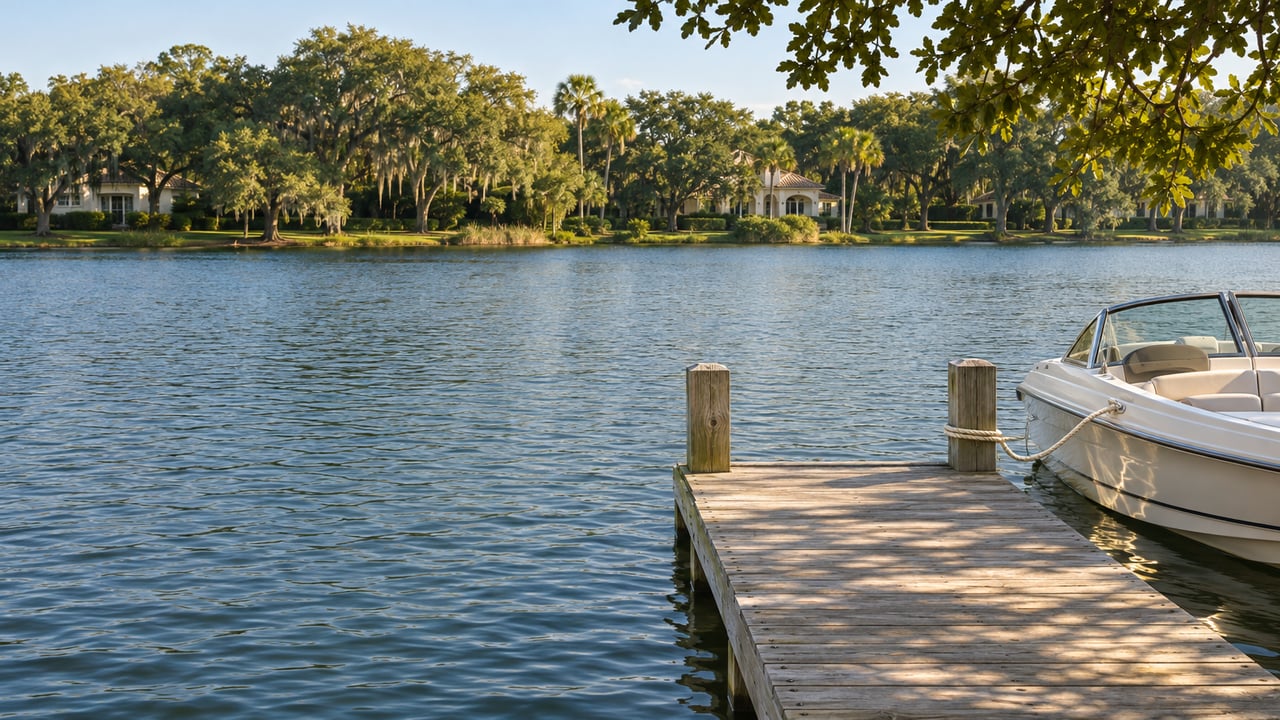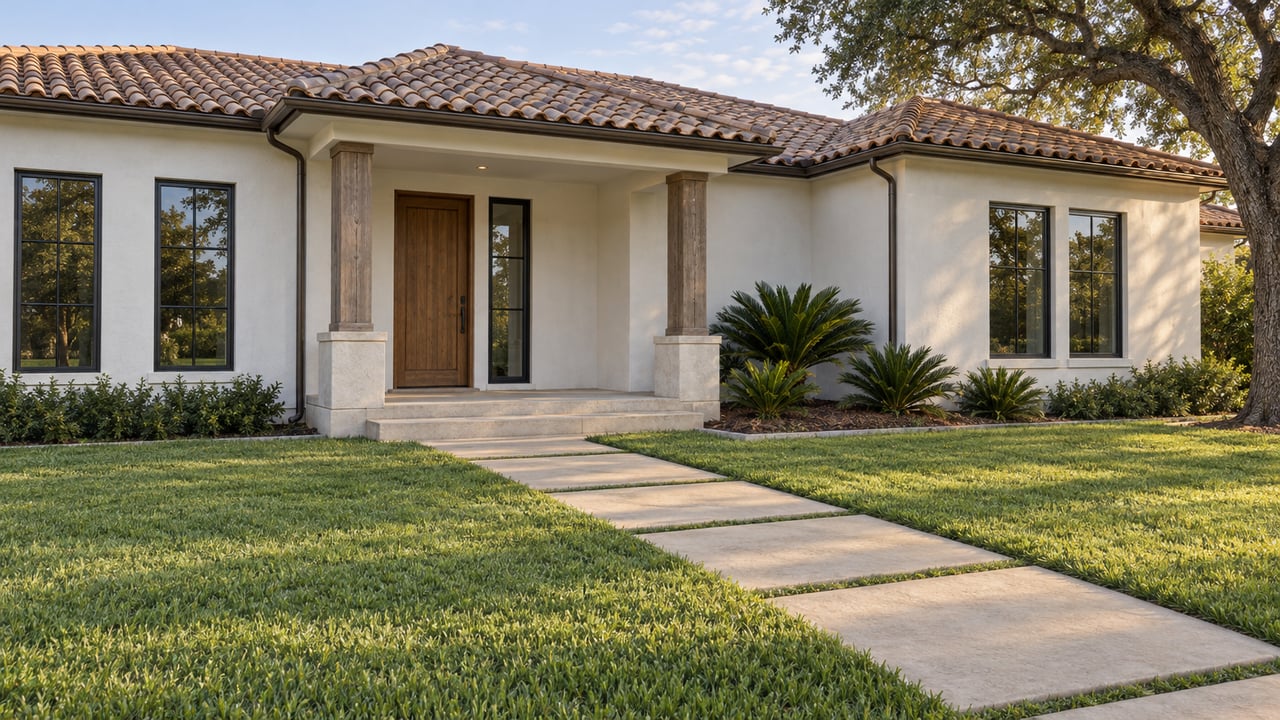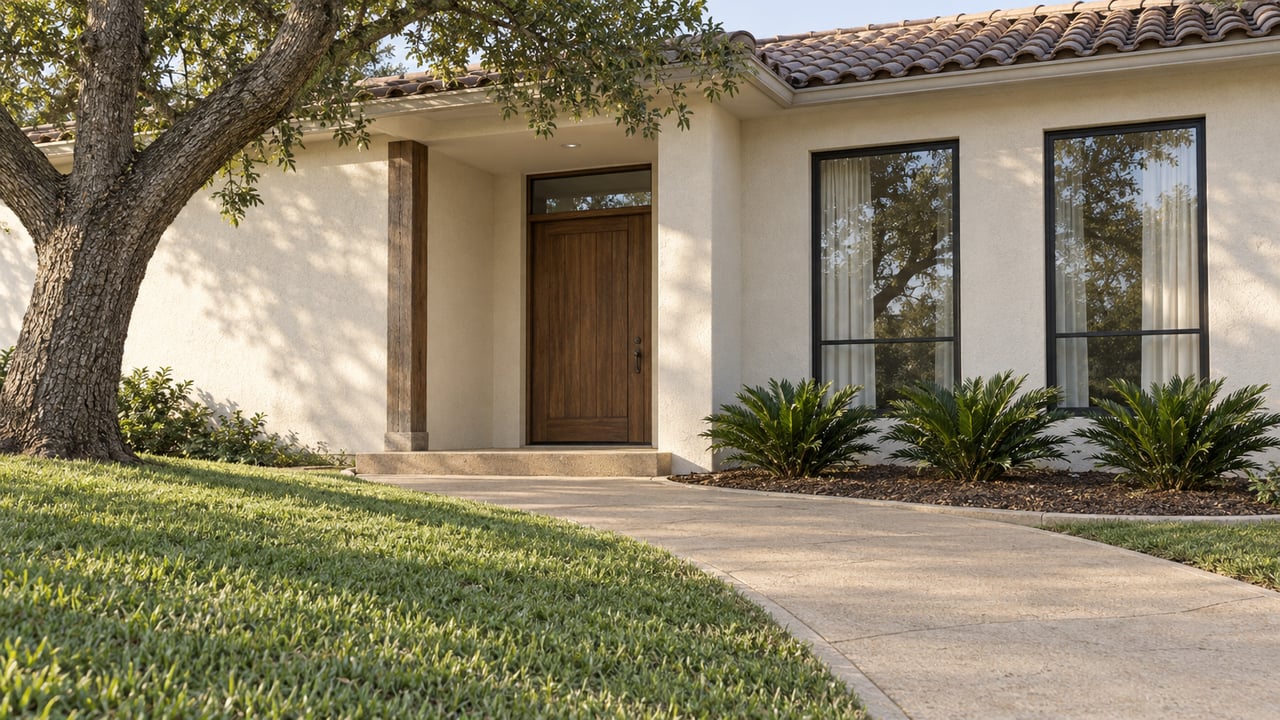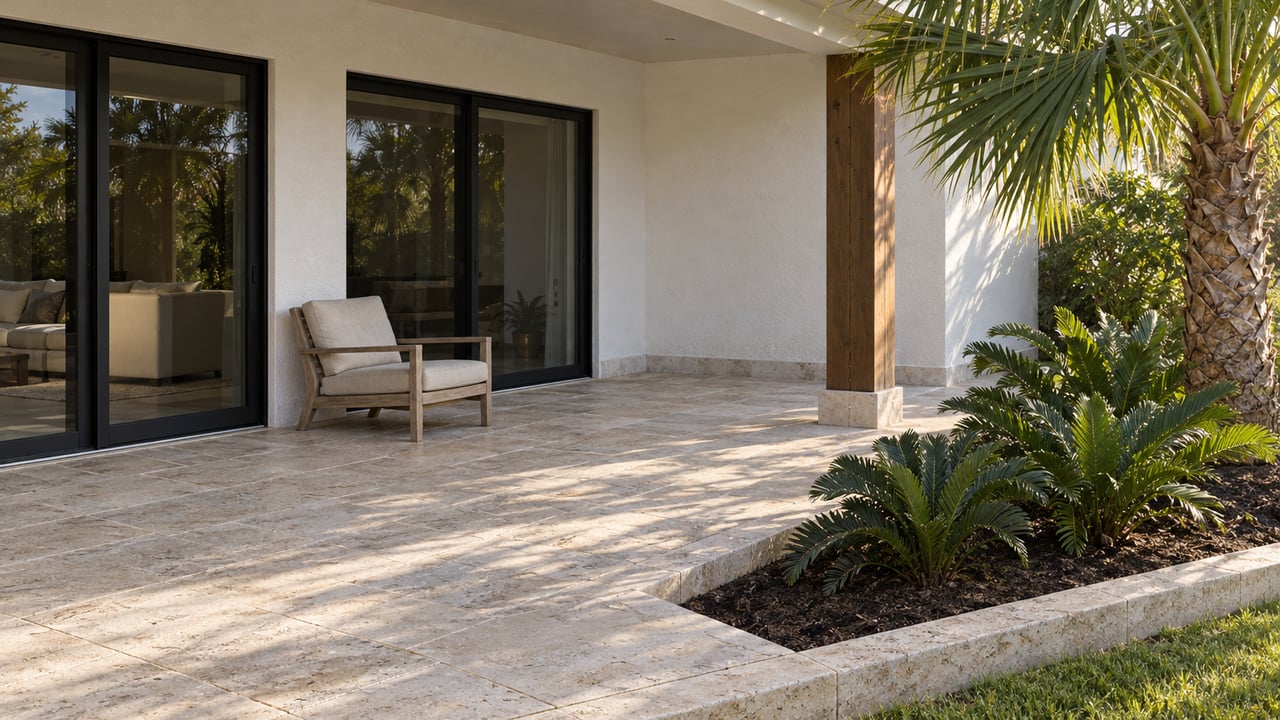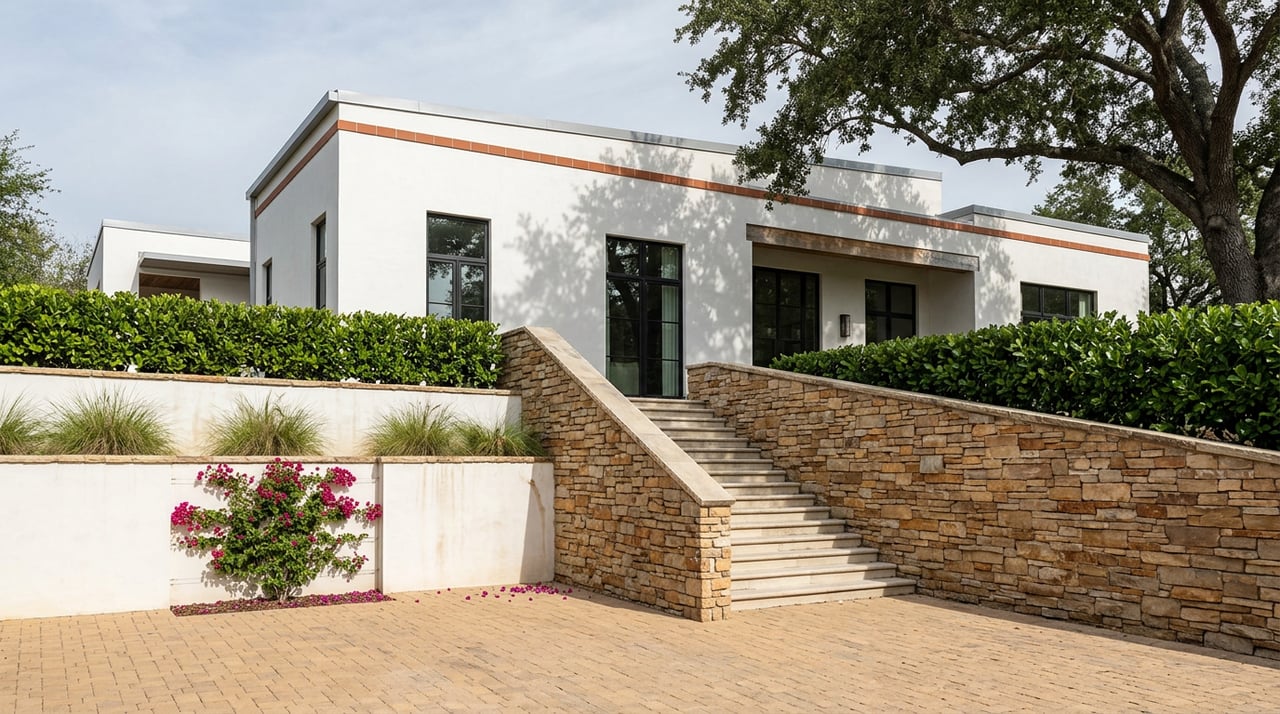
Picture two Clermont listings pulled from the same week's closings. Same square footage. Same price per square foot, give or take a rounding error. One sits in a newer community stretched along the Highway 27 corridor. The other sits a few miles away, tucked into a street called Ridgeglen Way. On paper, they are the same house.
They are not the same house. One of them absorbed a construction cost the other never had to pay, and neither the listing sheet nor the price-per-square-foot math will tell you which one.
That gap is the thing worth understanding before you compare two Clermont properties by their headline numbers alone.
Why Clermont Has Hills When Almost Nowhere Else Nearby Does
Clermont sits on the northern end of the Lake Wales Ridge, a band of ancient sand dunes that runs roughly a hundred miles down the spine of the Florida peninsula, from Lake County south past Lake Wales itself. The ridge is the reason Clermont has real elevation change in a state that is famously flat. A few miles north of downtown, Sugarloaf Mountain rises to 312 feet, the highest point on the Florida peninsula, and one of the only spots in Central Florida where cyclists and runners can find genuine climbing without leaving the metro area.
This is not a modern branding flourish. Before Clermont adopted "Choice of Champions" as its civic identity, longtime residents called it the "Gem of the Hills." The topography predates the tourism marketing, and it predates the subdivisions built into it.
For most buyers, the hills are the appeal. Lake views, elevation, a break from the pancake-flat streets common everywhere else in Orange and Lake counties. What the hills also do, quietly, is change what it costs to put a foundation in the ground.
What the Slope Actually Costs to Build On
Florida home construction defaults to a monolithic slab, poured flat and fast. On Clermont's sloped lots, that default often does not work. Builders instead turn to a stem wall foundation, which accommodates grade changes by raising the structural floor above the natural slope rather than fighting it.
That choice shows up directly in the budget. Estimates for 2026 construction in Clermont put a standard, mid-range single-family build at $175 to $245 per square foot. Custom builds on lots that require real hill stabilization, retaining structures, or extensive grading can push past $310 per square foot. The stem wall foundation itself, before any grading or retaining work, typically adds $10,000 to $25,000 over what a flat-lot slab would cost.
| Build type | Typical cost per square foot (2026) |
|---|---|
| Standard slab, flat lot | $175 to $245 |
| Custom build, significant hill stabilization | Up to $310+ |
| Stem wall foundation add-on (vs. flat slab) | +$10,000 to $25,000 |
None of that premium is visible in a resale listing's price-per-square-foot figure. It was paid once, years ago, by whoever built the house, and it is baked into the structure rather than itemized anywhere a buyer would think to look.
The Street Names Tell You Where the Ridge Is
You do not need a topographic map to find Clermont's graded ridge terrain. The developers already told you, one street sign at a time. Drive the roads that ring Sugarloaf Mountain and the naming pattern repeats: Kings Ridge Boulevard, Ridgeglen Way, Hammock Ridge, Highland View Circle, Summit Lakes Lane, Legendary Boulevard. These are not marketing flourishes layered over identical flat pads. They sit in the same high ground as Green Valley Country Club and Sugarloaf Mountain Road, and they describe real grade.
Kings Ridge, whose main boulevard runs straight through that ridge-adjacent grid of streets, is one clear example of a community built directly into the terrain rather than around it. A small community literally named Hillside Villas sits on this same high ground, though its inventory runs thin enough that pricing has to be built from older sold history rather than a current comp set, itself a sign of how narrow this hillside product category can be at any given moment.
Compare that to Clermont's newer growth corridors near Highway 27 and toward Lake Louisa State Park, where communities like Waterbrooke and Ridgeview have been developed more recently on larger master-planned parcels. Newer development does not automatically mean flatter ground in a city built on a ridge, but it does mean the grading and drainage work happened at the community level, engineered once across dozens of lots rather than solved individually by each builder. That collective approach can change how the cost gets distributed, even when it does not eliminate it.
The practical takeaway is not that hillside is bad and flat is good. It is that the two categories exist, they are not priced the same to build, and a citywide median tells you nothing about which one you are looking at.
What This Means With the Market Where It Is Right Now
As of the final week of August 2026, two independently tracked sets of closed sales put Clermont's median sale price within a few hundred dollars of each other, one at $438,065, the other at $438,000, both down roughly 1.9 percent from a year earlier. That kind of agreement between separate trackers is worth noting. It suggests a market that has settled into a real, current price level rather than one still being fought over. One of those trackers goes further and reports the shape of the market underneath that median: the middle half of Clermont's closed sales over the prior six months landed between $354,000 and $539,500. That spread matters more than the single median number, because where a specific property sits inside it says more about what you are actually comparing than the citywide midpoint does.
Inventory has loosened alongside that price stability. The same late-August snapshot shows roughly 194 active Clermont listings, a typical home going under contract in about 41 days, and just over three months of supply, still tilted toward sellers by conventional standards, but a calmer market than the multiple-offer scramble of a few years earlier.
That combination, a wide price distribution and a slower pace than the recent past, is exactly the environment where the hillside premium starts to matter for negotiation, not just for budgeting. A seller on a graded, flat-lot pad has less foundation cost baked into the home's history and may have more room to compete on price. A seller on a genuine ridge lot with a stem wall foundation and retaining work has a legitimate cost basis to defend, and a buyer who understands that distinction has a stronger position than one simply comparing two houses on price per square foot and assuming the cheaper number is the better deal.
The Questions That Actually Separate Two Comparable Listings
Before you treat two Clermont homes as interchangeable because they land at a similar price per square foot, it is worth asking a few things that a standard listing sheet will not answer on its own.
Ask whether the home sits on a stem wall or a slab foundation, and if the answer is stem wall, ask what the original grading and any retaining wall work involved. Ask whether there is a geotechnical or soil report on file from the original build, particularly for anything built in the last fifteen years, since sloped-lot construction in Florida increasingly generates that kind of documentation. And if you are planning any future addition, a pool, an expanded footprint, a casita, ask early whether the lot's grade will make that project meaningfully more expensive than it would be on a flat parcel a few miles away. A slope that looks charming from the street can turn a simple pool installation into a retaining-wall project.
These are not questions that show up on a comparative market analysis built purely from square footage and closing prices. They are the kind of questions that separate a home's sticker price from its actual cost basis, and they matter just as much for someone evaluating resale potential or planning a renovation as they do for someone building new.
A Few Common Questions
Does every hillside lot in Clermont cost more to build on? Not automatically. Some hillside lots have gentle enough grade that a modified slab handles it fine. The premium shows up when the slope is steep enough to require a true stem wall foundation, retaining structures, or significant grading, which is common but not universal across Clermont's ridge communities.
Does this affect a home I'm buying used, not building new? Yes. The foundation type and any grading work were paid for once, at construction, and they stay part of the structure. A stem wall foundation on a well-graded lot can be a durability advantage worth understanding, not just a cost to resent.
Is a flat lot always the safer financial choice? Not necessarily. A flat lot in a newer corridor community may have lower embedded foundation costs, but it also may lack the elevation, drainage advantage, or view that hillside buyers are specifically paying for. The right answer depends on what you are trying to buy, not just what it cost to build.
Clermont's hills are the reason people fall for the city in the first place. Understanding what they cost, and where on the map that cost actually shows up, is the difference between comparing two houses and comparing two very different construction stories that happen to have similar price tags.
If you are weighing a hillside lot against a flat one, or trying to figure out what a specific Clermont address is really built on, Soraya Tamaddon can walk the property with you and read it the way a design-minded advisor does, not just as square footage, but as a structure with a history worth understanding before you make an offer. Let's Connect.